

If your child was recently diagnosed with Erb’s Palsy, you are not alone. As a parent, you want only the best for your child and may wonder how a birth injury like this can affect his or her life.
What is Erb’s Palsy?
Erb’s Palsy is a condition caused by injury to the network of nerves in the shoulder area that carries signals from the spinal cord to the arms and hands. Also known as Erb-Duchenne Palsy it is a type of birth injury to the brachial plexus and is one of the most common and serious forms of shoulder dystocia injuries.
Most Erb’s Palsy injuries happen during the strain of childbirth when the shoulder of the baby gets caught and stretched behind the mother’s pelvic bone. Once the shoulder is caught, the brachial plexus can be compressed, stretched or torn resulting in brachial plexus palsy.
Erb’s Palsy, a Form of Brachial Plexus Palsy
Brachial plexus palsy refers to a form of paralysis of the arm as a result of an injury to the network of nerves that run from the spine, through the shoulder, and to the fingertips. The brachial plexus conducts signals from the spine to the arm and hand, and these signals are what cause the arm and hand muscles to move.
Learning of a child’s birth injury can be a difficult and challenging time. From our homes to yours, we at The Oshman Firm want to offer you our sincere thoughts, and provide you with the answers and real support you need.
Birth Injury Attorneys at The Oshman Firm
If you feel that your child’s Erb’s Palsy diagnosis was due to a birth injury or error and are ready to talk with someone today, contact the birth injury attorneys at The Oshman Firm at (800) 400-8182 for a no-cost, no-obligation consultation. We are here for you and ready to help you through this time.
Brachial Plexus Injuries
A brachial plexus injury is a nerve injury. The nerves that are damaged control muscles in the shoulder, arm, or hand. Any or all of these muscles may be paralyzed.
Sadly, injury to the brachial plexus is fairly common during the birthing process, with about 2 children in every 1000 suffering from a birth-related brachial plexus injury. While not all these injuries result in long-term conditions, each year more babies suffer from brachial plexus injuries than from Down’s Syndrome or muscular dystrophy.
Types of Injuries to the Brachial Plexus
There are four different types of brachial plexus injuries. Children with an injury to their brachial plexus are all affected in different ways. The resulting variations depend on the type of nerve damage. The severity of the injury ranges from least severe to most severe, they are:
Neurapraxia
The most common and mildest form of injury to the brachial plexus, neuropraxia occurs when the nerves stretch, but do not tear. This type of stretch injury typically heals itself with three months.
Neuroma
A Neuroma injury is when the brachial plexus stretches and the nerve injury heals but, scar tissue develops and presses on the healthy portion of the nerve. While the nerve has been damaged, it has not been torn and improvement should be seen within 3 months.
Rupture
This is a tear in the nerve itself but not where it attaches to the spine. Rupture injuries will not heal.
Avulsion
The most serious injury to the brachial plexus is called an avulsion injury. This occurs when the nerve is torn from its base at the spinal cord, resulting in a substantial loss of function in the arm. Avulsion may or may not be correctable with surgery.
Erb’s palsy injuries can be devastating for both the child and the child’s family. Long-term care can cause financial strife, and the child’s pain, suffering and struggle to socialize add to an already challenging situation.
If your child sustained any of the types of injuries described above because of medical malpractice, you may be able to seek compensation. While no amount of compensation can change what has happened, it can assist with medical bills, missed wages or therapy.
If Your Child Has Been Diagnosed With a Birth Injury Contact Our Experienced Attorneys
As New York attorneys who specialize in cases of birth injury, we have seen numerous cases where children are diagnosed shortly after birth with Erb’s palsy or other forms of brachial plexus palsy. We are familiar with the big questions you may have about your child’s diagnosis and have provided the following article to help you understand more about the injury and the various implications it can have for your child’s health and future.
If your child suffers from Erb’s Palsy caused by a mistake the doctor made, call the Erb’s Palsy attorneys of The Oshman Firm today for a free consultation at (800) 400-8182 or use the form to the right and we’ll be in touch with you shortly thereafter.
Causes of Erb’s Palsy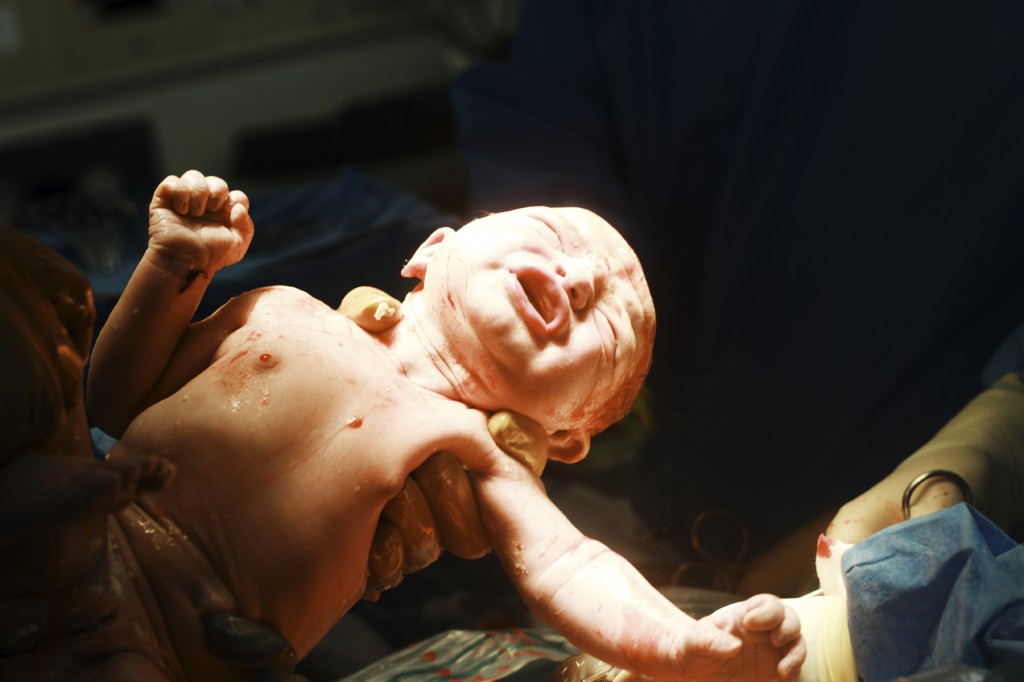
A brachial plexus injury like Erb’s palsy is a nerve injury that often occurs during the strain of childbirth. It is one of the most common and serious of all shoulder dystocia injuries, a type of trauma which results from a newborn’s shoulder becoming stuck behind the mother’s cervix during delivery.
When the shoulder is caught, the brachial plexus can become compressed, stretched or even tear. The nerves that are compromised during this event control muscles in the shoulder, arm or hand. The injury which results to these nerves can cause the shoulder dystocia victim to suffer a potentially permanent, partial or complete paralysis of the arm.
Shoulder Dystocia
More specifically, when a baby’s shoulder becomes stuck behind the mother’s pubic bone the baby’s head delivers but the shoulders do not follow. This condition is known as a shoulder dystocia. It is one of the most difficult obstacles that can occur during delivery because it carries with it the potential for high risk complications.
At this point the physician must perform a particular delivery maneuver avoiding the placement of pressure on the shoulder. One method is by supporting the head of the baby and applying a small amount of traction during dislodging maneuvers.
During this time, the baby’s brachial plexus nerves may suffer injury, particularly if the doctor uses excessive traction on the head while the baby’s shoulder remains stuck.
If these methods do not work, the doctor may perform an emergency Caesarean section, use birth-assisting tools, or in the most extreme cases, break the mother’s pelvis. If any of these procedures are done improperly, an Erb’s Palsy can occur where the nerve tissue between the arm and shoulder is stretched, partially torn or completely ruptured.
Preventing Shoulder Dystocia
Beforehand, a properly trained obstetrician will identify shoulder dystocia risks and take steps to avoid birth injury during delivery.
Risk Factors Contributing To Shoulder Dystocia
If any of these high risk factors exist, a delivery involving a shoulder dystocia can be prevented by scheduling a caesarean section. Where a shoulder dystocia does occur during birth, one of sixteen different maneuvers taught to obstetricians to free the trapped shoulder can be utilized.
1. High birth-weight babies ( >8lbs 14oz)
2. Maternal Diabetes
3. Heavy Mothers
4. Short Maternal Stature
5. A Contracted or Flat Pelvis
6. Pregnancy Beyond 40 weeks
7. Protracted Second Stage of labor
It is important for physicians attending a birth with these risk factors to be aware and exercise all possible caution during the birthing process. In some cases, improper use of force by a doctor or midwife may be to blame for your child’s diagnosis of Erb’s palsy. If the birth is not performed with the proper level of skill and care, or if birthing tools are improperly used during delivery, these errors can have long-lasting consequences to your child’s future.
The use of tools, including forceps or vacuum, to help the baby descend, may increase the risk of shoulder dystocia. Studies also suggest an association between an increased risk for shoulder dystocia and the use of labor-inducing drugs.
Symptoms of Erb’s Palsy
The symptoms of Erb’s Palsy are usually very obvious. Almost immediately after birth, babies with an injury to the brachial plexus have a noticeable limitation in their ability to move the hand or arm on one side of their body. They are unable to form a grip or respond with normal reflexes. In some cases, the baby’s arm will be bent at the elbow against their body.
For example, a baby suffering from this condition can often be seen with the affected arm lying limp at one side or an extended elbow devoid of movement.
Injuries associated with the condition also usually affect the neck, clavicle, shoulder or arm. Potential injuries can include shoulder or elbow dislocation, a “frozen shoulder” or soft tissue and joint contractures.
- No muscle control and no feeling in the arm or hand.
- The ability to move but with little control.
- The use of hands but not of the shoulder or elbow.
- The entire arm may be paralyzed with the hand and fingers hanging limp.
- Facial paralysis on the affected side.
- Not able to sit up without assistance.
- The inability to crawl without the use of therapeutic devices.
In some cases, symptoms will fade on their own within a few months. However, other symptoms may persist and require surgery. The specific type of injury sustained will determine the symptoms as well as their proper treatment.
Treatment for Erb’s Palsy
When a baby is injured and suffers from Erb’s palsy, their injury is unique. The paralysis can be partial or complete; the damage to each nerve can range from bruising to tearing. Some babies recover on their own, while some may require specialist intervention.
In 80 percent of the babies born with Erb’s palsy, recovery will occur without a surgical intervention.
Treatment for Erb’s Palsy that does not spontaneously recover generally consists of exercise and physical therapy. Often times, though, a child with brachial plexus palsy can benefit from surgical procedures to increase their arm functions.
Surgery Treatment For Erb’s Palsy
If there is no change over the first three months, nerve surgery may be helpful. However, nerve surgery will not restore normal function or help infants over one year old. After surgery, the infant will wear a splint for approximately three weeks. Because nerves grow at a rate of one inch per month, it may take several months, or even years, for nerves repaired at the neck to reach the muscles of the lower arm and hand.
Surgery is found to be most effective in Erb’s Palsy children that are between the ages of 5 and 12 months; beyond this age group, surgery will not be as effective. Whether or not surgery is performed is dependent upon the individual child’s condition. Where surgery occurs, it is performed by a pediatric neurosurgeon. The Erb’s Palsy surgical procedure requires special anesthesia, an operating microscope, monitoring equipment, and specialists to be able to expose and identify each of the nerves of the brachial plexus and surrounding structures. Most children with Erb’s Palsy have damage to multiple nerves so more than one procedure must be performed. Erb’s palsy may also be helped by performing daily exercises to both keep muscles limber and to prevent the joints from freezing.
Treating a Neuroma Injury
A neuroma injury may be treated by, Neurolysis, a procedure that removes scar tissue from a damaged nerve that can impact healthy nerves.
Treating a Rupture Injury
Surgical Erb’s palsy treatment may also be necessary because the nerve has been torn at several locations. A surgical procedure known as nerve grafting can be used to connect two severed pieces of nerve tissue. Combined with therapy a nerve graft can sometimes restore rupture injuries.
Treating an Avulsion Injury
Surgical Erb’s palsy treatment for avulsion injuries will probably require the most extensive process to restore function. The most severe type of Erb’s palsy, avulsion injuries mean that the nerves are pulled from the spinal cord. Multiple surgeries, including a muscle transfer might be necessary to reach the highest functioning point of the patient’s ability. Since diagnosing the Erb’s palsy is not as easy as simply classifying the injuries into one of the four categories, developing an Erb’s palsy treatment plan can be difficult.
Tendon Transfers
Some children with brachial plexus injuries will continue to have weakness in the shoulder, arm or hand. They may find it difficult to raise the hand over the head, to turn the hand palm up, or to extend the wrist. In some of these cases, a surgical procedure called tendon transfer may be helpful. Tendons are the connective tissues between muscle and bone. The surgeon will separate the tendon from its normal attachment and reattach it in a different place. This is often helpful in improving shoulder and wrist motions as well as elbow position and hand grip.
Keeping Your Babies Joints Limber
Because your baby cannot move the affected arm alone, the American Academy of Orthopaedic Surgeons recommends that you take an active part in keeping the joints limber and the functioning muscles fit. Your doctor will recommend physical therapy and range of motion exercises. Do these exercises with your baby every day, two or three times a day, beginning when your baby is about three weeks old. The exercises will maintain a range of motion in the shoulder, elbow, wrist and hand and prevent the joint from becoming permanently stiff, a condition called a joint contracture.
Sometimes, the affected arm is noticeably smaller than the unaffected arm. This occurs because the arm is not used as much. Although the size difference is permanent, it will not increase with age. You should also remember that your child is very adaptable. Be supportive and encouraging; focus on what your child can do. This will help your child develop a healthy sense of self-esteem and adjust to any functional limitations.
If you feel your child suffers from a brachial plexus injury such as Erb’s palsy and wish to bring legal action to compensate your child for their physical and emotional damages, please call the offices of The Oshman Firm. Contact us today at 1-800-400-8182, or contact us online for a free case evaluation.
Timeline For Treating Erb’s Palsy
According to the Brachial Plexus Palsy Clinic at St. Luis Children’s Hospital, the age timeline for treating the condition is:
- Newborn to Two Weeks: A physical therapist guides the newborn through specialized exercises.
- One Month: Additional exercise are implemented and a brief consultation with a surgeon is given, though surgery is rarely recommended at this stage.
- Three Months: A more formal surgical evaluation takes place.
- Three to Five Months: Isolated nerve transfers may be performed.
- Six to Nine Months: Surgery typically occurs during this stage, if necessary.
If serious symptoms persist after several months, unfortunately it is unlikely that the nerves will heal on their own. When this occurs, there is no guaranteed way to heal the damaged nerve, and regimen of exercise and physical therapy will likely continue throughout most of the child’s youth.
Erb’s Palsy Settlements and Claim Compensation
Depending on the severity of your child’s symptoms, getting the best possible care for your child can present a significant financial burden to your family. If your child was diagnosed with Erb’s palsy and you suspect that it may be the result of birth injury caused by medical negligence, speak to a birth injury attorney about an erb’s palsy lawsuit.
When you are pregnant, you trust your healthcare professional to make the right decisions for you and your baby. If your trust has been violated by a hospital or the physician who attended you, it is your right to receive financial compensation, not only for the additional medical expenses but also for the pain and suffering they have caused you. Our team of New York Erb’s palsy attorneys is ready to fight on behalf of you and your child. Call us today for a no-cost, no-obligation consultation of your case.
Contact New York Erb’s Palsy Attorneys at The Oshman Firm
Contact the birth injury attorneys at The Oshman Firm today at (800) 400-8182 for a confidential, no-cost, no-obligation consultation. We have assisted hundreds of others who have been victimized by someone another’s negligence and carelessness; we want to help you, too! Compensation can’t change the past, but it can help give your child a higher quality of life.
If you feel your child suffers from a brachial plexus injury such as Erb’s Palsy and wish to bring legal action to compensate your child for their physical and emotional damages, please contact us and ask for Partner Ted Oshman, or fill out the form below.
Erb’s Palsy FAQs
An avulsion – the nerve is torn from the spine.
A rupture – the nerve is torn but not where it attaches to the spine.
A neuroma – occurs where scar tissue has grown around the injury putting pressure on the nerve resulting in reduction of signals to the muscles.
Praxis – the nerve has been damaged but not torn.