Fill out our form or call us for a free consultation. We provide nationwide service.


Fill out the form to connect with our legal team for a free consultation, we’ll respond within 1 hour during business hours. Or call us 24/7 at (800) 400-8182.


.avif)
A fracture is a break of one of the bones in the body. Fractures are common; the average individual experiences a fracture twice in their lifetime. While fractures can occur at any time throughout a person’s life, young children and older individuals experience fractures more commonly than adults do. Fractures occur when trauma or force exerted on the bone is stronger than the bone itself. A bone can be fractured in many ways, as discussed below, which determines the severity of the injury, the treatment necessary, and the time it will take for the bone to heal.
Fractures can happen in many ways, the three most common of which include:
In cases where another party caused or contributed to your traumatic accident, resulting in fracture or other serious injury, you may be able to recover compensation for your losses. Please contact us to learn more about your legal rights and options.
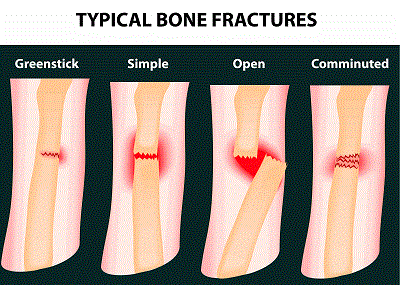
A bone can fracture in many ways. The main categories of fractures include incomplete, complete, simple, and compound. In an incomplete fracture, the bone cracks but does not break all the way through. Recovery from such a fracture typically takes less time than recovery from a complete fracture. In a complete fracture, the bone breaks all the way through, fracturing into two or more parts.
In a simple fracture (also called a closed fracture) the bone breaks but does not pierce through the skin, whereas a compound fracture causes the bone to break through the skin. A compound fracture (also called an open fracture) may result in a protruding bone or the bone may recede back into the wound and no longer be visible.
Fractures are further classified by how the bone breaks. The following are specific types of fractures, which can affect various bones throughout the body, though some types are more common in certain bones.
Stress fractures are tiny hairline or fissure fractures, which are commonly the result of overuse or sports-related injuries. Stress fractures most commonly affect weight-bearing bones in the legs or foot. Stress fractures typically occur when a fatigued muscle is no longer able absorb the shock of impact. Impact with an unfamiliar surface, extreme physical stress and improper equipment use are common culprits in stress fractures.
The following is a list of fractures based on where the bone is located in the body.
Because children’s bones are still developing, they are more prone to greenstick and buckle fractures, whereby the bone bows instead of completely breaking. This is good because the bone’s cortex is not typically disrupted. However, fractures in children carry unique risks. Growthplate injuries and plastic deformation are two possible complications of fracture in children.
When the growth plate is affected by fracture, there is a risk of abnormal growth of the bones. Careful treatment and accurate reduction are necessary to make sure the bone continues to grow properly. Plastic deformation, whereby the bone permanently bends but doesn’t break, is another risk with fractures in children. This complication may require a surgery called osteotomy, in which the bone is cut for realignment, when closed realignment strategies have failed.
Because of the effects of aging on the bones, fractures can be particularly serious for older individuals. Falls are one of the most common culprits of fractures in seniors. In fact, among Americans over the age of 65, fall-related fractures and injuries are the leading cause of accidental death. Ninety percent of all hip fractures are the result of falls in older individuals.
Falls, which commonly lead to fractures in seniors, can be caused by a loss of footing or traction on unsafe surfaces or tripping due to hazardous conditions. Medications, alcohol use, changes in muscle mass, bone fragility, changes in vision, and other factors can increase the risk of falls and, in some cases, the severity of subsequent injuries. It is important for seniors to speak with their health provider about ways to reduce the risk of falls, which can lead to fractures and other serious injuries.
In most cases, a person knows when they have suffered a fracture. A snap or cracking sound in the bone is often enough to know that you have broken a bone. Other signs and symptoms of fractures include swelling, tenderness, deformity, or even part of the bone exposed through the skin. While some fractures can be obvious, others are more difficult to diagnose.
Stress fractures, occult fractures, and impacted fractures can be difficult to detect on an x-ray. In some cases, a fracture can be misdiagnosed as another type of fracture or injury, which is more common with spiral vs. oblique fractures, avulsion, and stress fractures.
Physical examination and x-rays are the common ways of diagnosing fractures.
Time is often the best treatment for stable fractures, in conjunction with devices that correctly position the bone during healing, such as casts, splits, and pins. Casts, made of either fiberglass or plaster, are external devices used to stabilize the area allowing the bone to heal. Casts, splits and other devices may be requires for weeks to months following fracture. Crutches may be used during this time if the affected bone is a weight-bearing bone.
In some cases, internal fixation is necessary to stabilize the bone as it heals. Metal plates, pins, or screws may be used to hold a bone in the proper position as it heals. These are often permanent.
In cases where complications arise or other tissues are affected by the trauma, additional treatments may be necessary, such as surgery. Pain medications or anti-inflammatory drugs are sometimes administered to help a patient reduce their symptoms of pain, particularly in the early stages of recovery.
After a fracture has occurred, the body starts the work of healing. Initially, the body acts to protect the injured area by creating a protective blood clot and callus/fibrous tissue. Then, new threads of bone tissue begin to develop on both sides of the fracture line, growing towards each other. Once the fracture is closed, the callus/fibrous tissue is re-absorbed by the body. Pain typically stops before healing is complete. This process can take several weeks to many months, depending on the type and severity of the fracture and how well a patient follows medical advice.
Activity may still be limited after a cast or brace is removed until the bone is solid enough and the surrounding tissues have healed and become stronger. The tissues surrounding the bone, such as ligaments and muscles, can become stiff or weak during fracture recovery from lack of use. Rehabilitative exercises, including stretches, weight-bearing activities, and other exercises, may be necessary to bring the body back to full health. It is important not to try to rush the healing process, as this can compromise your progress and lead to further injury.
When fractures or other serious injuries are the product of a preventable accident, the responsible party can be held liable and the injured party may be able to seek compensation for their damages, including medical expenses, loss of income, and more. If you believe that your injuries are the result of another party’s negligence or wrongdoing, please contact us to speak with a qualified New York personal injury attorney at The Oshman Firm to learn more about your legal rights and options.
Contact us today at 1-800-400-8182, or contact us online for a free case evaluation. Our firm utilizes the contingency fee system, where we not only provide free consultations, but never charge a fee unless we are successful in obtaining a settlement or jury verdict on your behalf.

The Oshman Firm was founded over 35 years ago on a commitment to service and excellence in all aspects of practicing law. Today, we provide the same level of service to those in need in all 50 states.
Learn More
If there is potential compensation available that could ease your financial burden and aid in your recovery, you need to seek it.
Contact the Oshman Firm today at (800) 400-8182 or by using the form on this page for a free, no-obligation consultation to discuss your case.