Fill out our form or call us for a free consultation. We provide nationwide service.


Fill out the form to connect with our legal team for a free consultation, we’ll respond within 1 hour during business hours. Or call us 24/7 at (800) 400-8182.



.avif)
Hand fractures can occur in any of the 27 bones in the hand. Fractures of the hand can occur as a result of a twisting injury, a fall, a crush injury, or direct contact in sports, vehicle or other accidents. Read on to learn more about the anatomy of the hand, and the symptoms, diagnosis and treatment of hand fractures
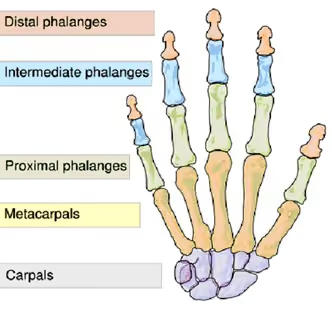
The hand contains numerous bones, any of which can suffer fracture in an accident.
Moving from the wrist towards the finger tips, the hand is made of the following bones:
Signs and symptoms of one or move broken bones in the hand may include:
To diagnose a hand fracture, a doctor—often an orthpedical specialist—will conduct a physical examination to check the position of the fingers, skin condition, range of motion ability, and sensory ability of the fingers to determine if any never damage has occurred. X-rays and other diagnostic tests can help a doctor to determine the exact nature and extent of the fracture.
Broken bones in the hand can be treated with surgical and non-surgical methods.
In most cases, the bones of the hand can be realigned with non-surgical manipulation. In such cases, a splint, fracture-brace, or cast will be used to immobilize the fracture and keep the injured bones in proper positioning.
Repeat x-rays will usually be taken following such immobilization to ensure that the bones are healing properly. A cast or other type of immobilization device is usually worn for 3 to 6 weeks. Hand exercises may be recommended to rehabilitate the injury site.
In some more serious cases, surgery may be required to help stabilize and re-align the bones. Compound fractures, open fractures, which involve the bone breaking the skin, and bone crush injuries are more likely to require surgery. During surgery, the placement of plates, wires or screws may be required to hold the fractured parts of the bone in place for proper healing.
A doctor will often periodically examine the hand to make sure the joint doesn't tighten or contract during healing. However, joint stiffness is a common occurrence during the healing process.
Exercises can be used to help reduce stiffness, restore strength, and increase range of motion. In some cases, these exercises will be performed under the guidance of a physical therapist.

The Oshman Firm was founded over 35 years ago on a commitment to service and excellence in all aspects of practicing law. Today, we provide the same level of service to those in need in all 50 states.
Learn More
If there is potential compensation available that could ease your financial burden and aid in your recovery, you need to seek it.
Contact the Oshman Firm today at (800) 400-8182 or by using the form on this page for a free, no-obligation consultation to discuss your case.